
Every so often, a new “body reset method” pops up online.
Sometimes it’s a glass of a very bold-looking green drink.
Sometimes it’s a recipe that requires seven unfamiliar ingredients.
Other methods require you to drink some kind of liquid—whose taste makes you question the meaning of life—at a specific time, and believe that your body will feel completely refreshed the next morning.
I used to be easily swayed by these claims, too.
Especially when I’d gone several days with irregular meals and very few vegetables, and my stomach and intestines started to protest.
At times like that, I didn’t want to admit that I’d been surviving mostly on bread, coffee, and convenience foods lately.
I’d much rather believe that all I was missing was a bottle of some pricey miracle drink.

My diet often swings between two extremes.
One Monday, I might suddenly decide to take better care of my body.
I’ll add plenty of fruit to my breakfast.
For lunch, I’ll have a big bowl of salad.
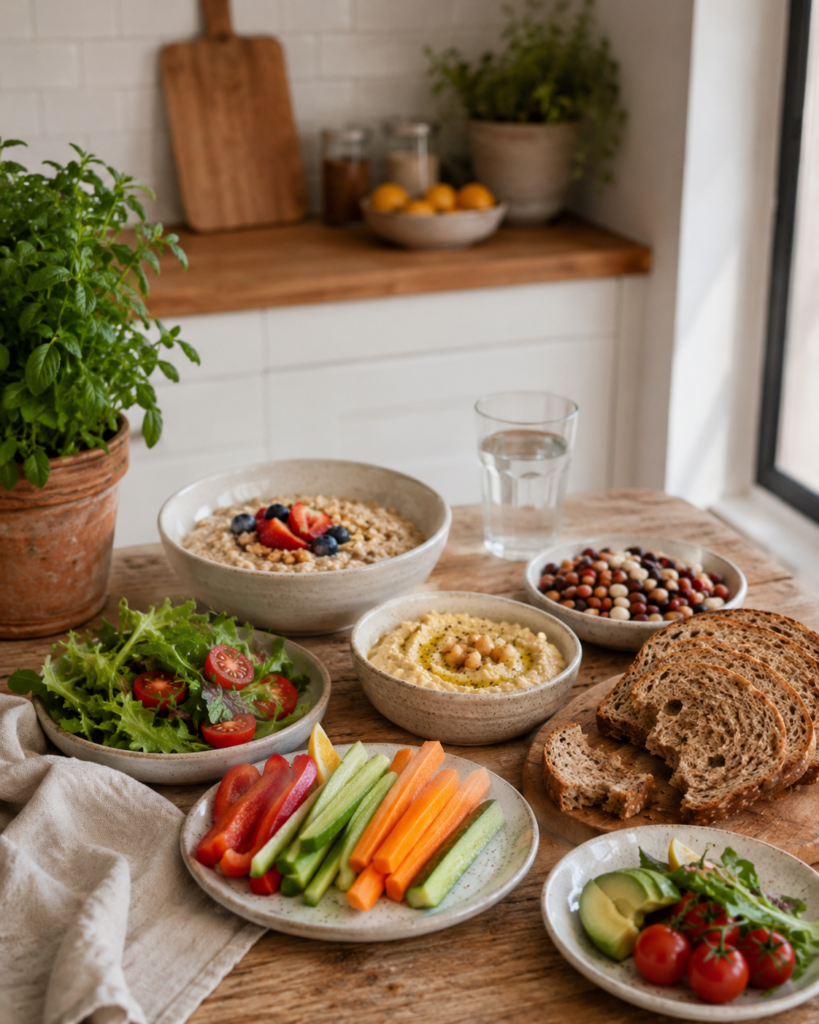
For dinner, I’ll add beans, whole grains, and all kinds of vegetables.
In a single day, I’ll make up for all the dietary fiber I’ve been missing over the past half-month.
Then my stomach starts to act up.
So I come to the conclusion:
“Healthy food might not be right for me.”
Of course, the problem isn’t that vegetables have betrayed me.
The problem is that I’ve suddenly changed my diet too quickly and then expected my body to adapt immediately.

Later, I stopped chasing a “fresh start” and began focusing on consistency.
You don’t have to pack five superfoods into your breakfast all at once.
Start by adding a little fruit.
You don’t have to ban white bread for good on a certain Monday; you can gradually replace some of it with whole grains.
Add a little more vegetables to your lunch.
Include legumes in your dinner every now and then.
If you usually eat a diet low in fiber, increase your intake gradually; drinking enough fluids can also help dietary fiber work more effectively. Vegetables, fruits, legumes, and whole grains are all common sources of fiber.
This sounds far less exciting than a “Three-Day Body Reset Plan.”
But my body clearly prefers this boring approach.
I’ve also started taking my meals more seriously.
No more eating while in meetings.
No more standing in the kitchen and wolfing down a few bites.
And certainly no more skipping meals during the day only to make up for it with a massive dinner at night.
What’s good for your stomach might not be some expensive secret.
It’s often just a matter of eating at relatively regular intervals, consuming moderate portions, staying well-hydrated, and avoiding sudden dietary overhauls every few days.
Of course, digestive issues can’t always be resolved by adjusting your diet.
If you experience recurring abdominal pain, changes in bowel movements, bleeding, persistent bloating, or other abnormalities, you shouldn’t rely solely on online recipes to self-diagnose—you should consult a doctor.
A glass of green juice is no substitute for a professional evaluation.
Even if it looks great in a photo.

Even now, there are still times when my eating habits aren’t very regular.
Travel, social gatherings, a busy schedule, and my mood can all affect my diet.
I still love bread, and I have no intention of apologizing for it.
The difference is that I no longer punish myself for what I did a few days earlier by resorting to extreme measures.
I won’t suddenly put my body through a nutritional test just because I had a few meals with fewer vegetables.
I’ll just add a little fruit to my next meal.
I’ll drink more water tomorrow.
This week, I’ll buy a few kinds of vegetables that I actually enjoy eating.
Healthy digestion doesn’t have to be perfect every day.
What it really needs is a rhythm that my body can understand.
My stomach has probably never asked for a “detox.”
It just hopes I won’t skip breakfast, rely on coffee to get through the afternoon, and then suddenly treat it to a feast in the evening.
That’s actually a pretty reasonable request.

Leave a Reply