
In the past, whenever I had an important meeting, I would wake up half an hour earlier than usual.
It wasn’t to review my materials.
Nor was it to have a full breakfast ahead of time.
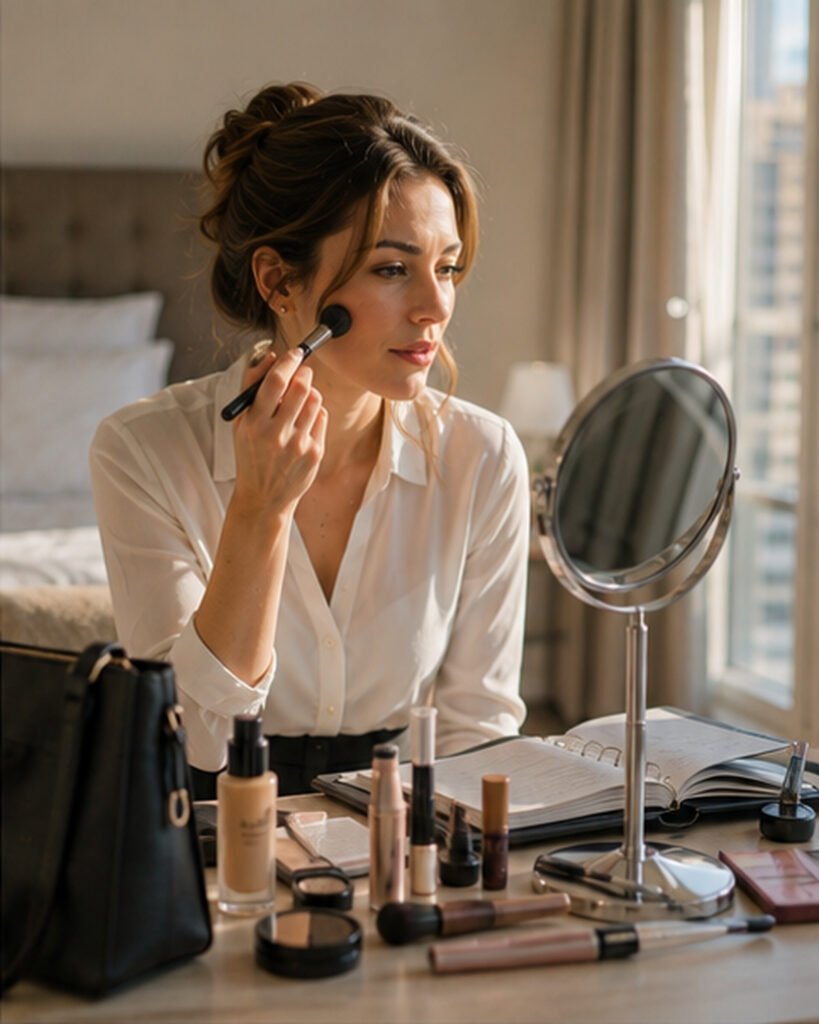
It was to apply makeup that looked “professional enough.”
The foundation had to be even.
Dark circles had to disappear.
My eyebrows had to be defined, but not too heavy.
The lipstick had to brighten my complexion, but without making it seem like I’d spent too much time on it.
It was a very delicate balance.
You need to look alert, confident, and trustworthy, while at the same time making everyone believe you didn’t spend any time on it at all.
Once, I had to present a proposal to several important clients.
The night before, I had gone over the presentation four times.
I knew exactly what to say on every slide, and I had prepared answers to potential questions in advance.
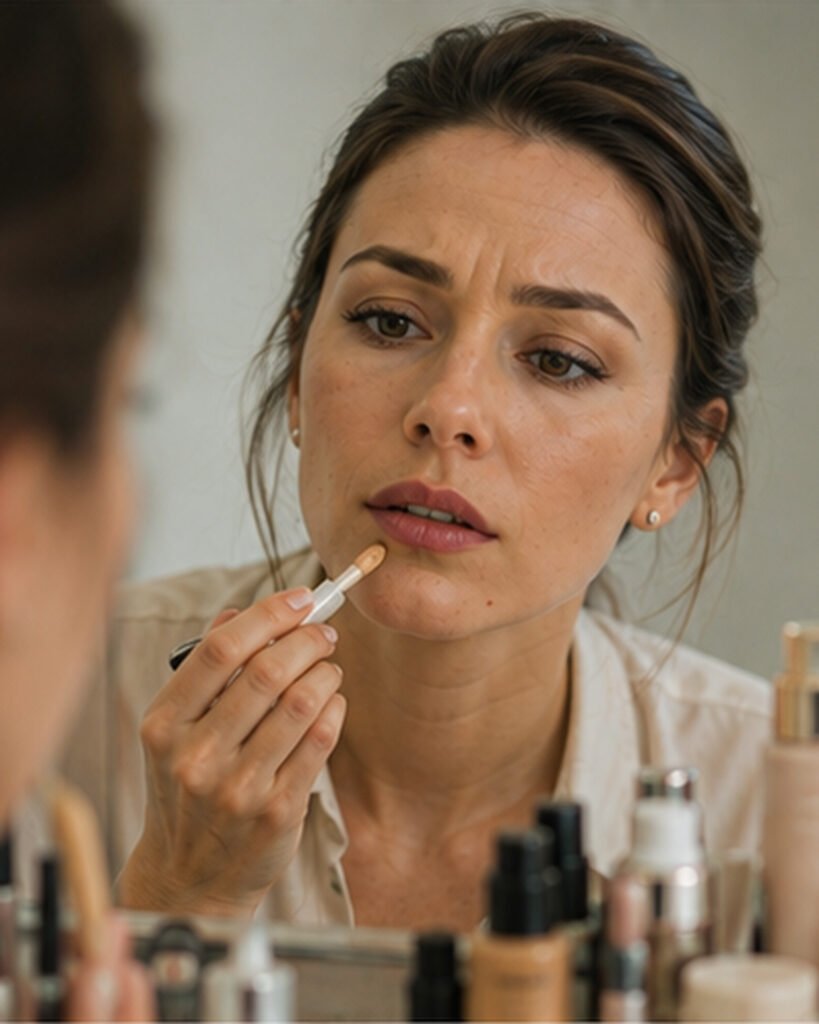
But the next morning, what really had me anxious was a pimple on my face.
It appeared right in the center of my chin—prominent and defiant.
It was as if it were the real star of the meeting.
I applied concealer.
Then I added another layer of concealer.
And to make the concealer look more natural, I touched up my foundation.
In the end, the pimple didn’t disappear—it just turned into a small hill with a more even color.
Before leaving the house, I stood in front of the mirror and wondered:
Will people think I look tired?
Will they think I’m not put-together enough?
Will they doubt my professional competence because my makeup isn’t perfect?
Looking back now, these questions seem a bit ridiculous.
But that morning, they felt very real.
Once the meeting began, I quickly realized that no one cared about that pimple.
The client was concerned about the schedule.
My colleagues were concerned about the budget.
The project lead was concerned about whether the plan could be implemented.
That pimple was present for the entire meeting, yet it never got a chance to speak.
When someone asked a tough question, I didn’t think about my foundation.
What came to mind was the data I’d organized the night before.
When the projector suddenly malfunctioned, I didn’t check my lipstick.
I pulled out the printed backup materials and continued my presentation.
After the meeting, a colleague said to me:
“You were very well prepared today, and you kept the pace steady throughout.”
She didn’t mention that my skin looked flawless.
Nor did she say that my lipstick color complemented the meeting room lighting perfectly.
She was praising my preparation and performance.
After that day, I began to rethink the relationship between makeup and work.
I still love wearing makeup.
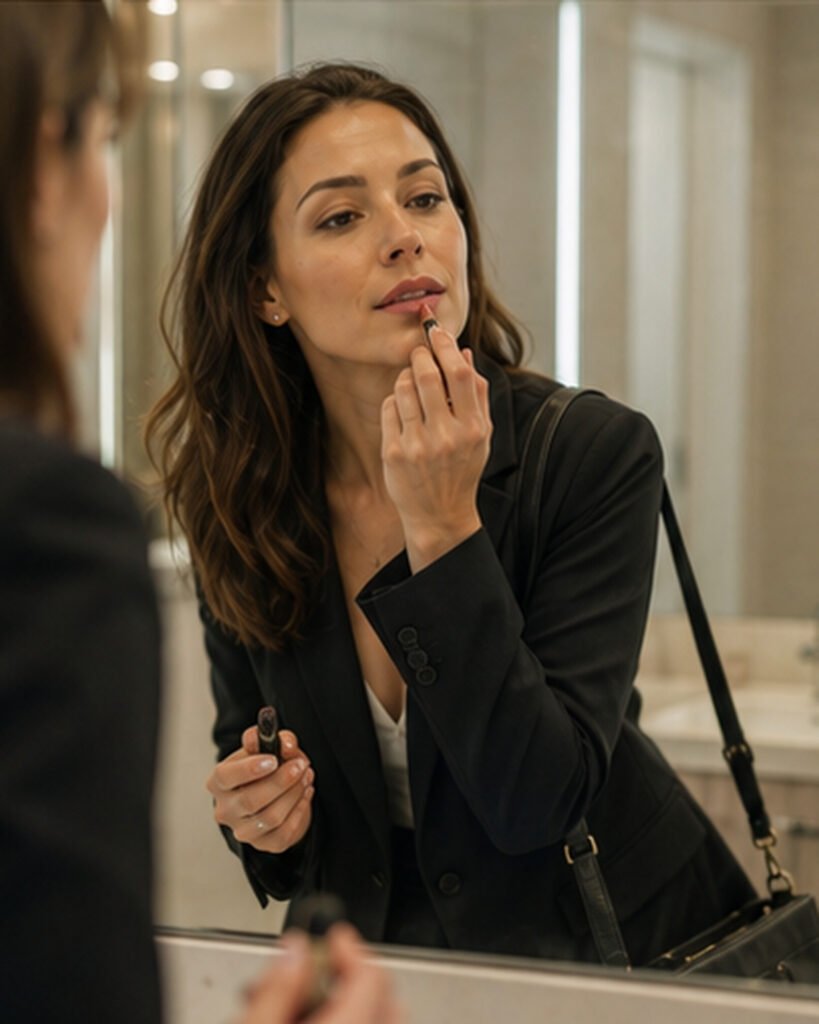
Some mornings, applying a little blush really does lift my spirits.
The right lipstick can also help me stand a little straighter as I walk into the conference room.
These feelings are real.
But makeup can be a small ritual that helps me get into the right mindset—it doesn’t have to be the armor that proves I’m worthy of being there.
I don’t need to erase every trace of fatigue, age, and life from my face before I’m worthy of discussing budgets, projects, and decisions.
Makeup can boost my confidence.
But it shouldn’t be responsible for creating my professional competence.

Nowadays, when I have an important task ahead, I still make a bit of an effort with my appearance.
But the order in which I prepare has changed.
First, I review my materials.
I check the schedule.
I prepare a backup plan.
I eat a little something.
And only then do I decide whether to apply an extra coat of mascara today.
Sometimes I do a full face of makeup.
Other times, I just apply sunscreen, groom my eyebrows, and add a bit of lip balm.
The difference isn’t as big as I used to think.
What really makes me look reliable in meetings has never been a flawless face.
It’s that when others ask questions, I know what I’m talking about.
I still like that lipstick in my briefcase.
But now it’s just a lipstick.
It’s no longer responsible for protecting me, nor for proving anything on my behalf.
That’s my job.
And I do it better than any concealer ever could.

Leave a Reply