
I used to say that I was “someone who can’t function without coffee.”
And I’d say it with a touch of pride.
It made me sound busy, capable, and added just the right amount of drama.
Coffee is more than just a drink to me.
It’s almost become part of my identity.
My first cup of coffee in the morning signals that I’m ready to start working.
My second cup in the afternoon means I’m pushing through.
And that urgent cup of coffee at 4:30 p.m. meant that some issues had arisen that couldn’t be discussed openly.
I have mugs printed with coffee jokes.
I forward coffee-themed memes to my friends.
I even treat the staff at my favorite coffee shop with a sense of trust almost as close as that between family members.
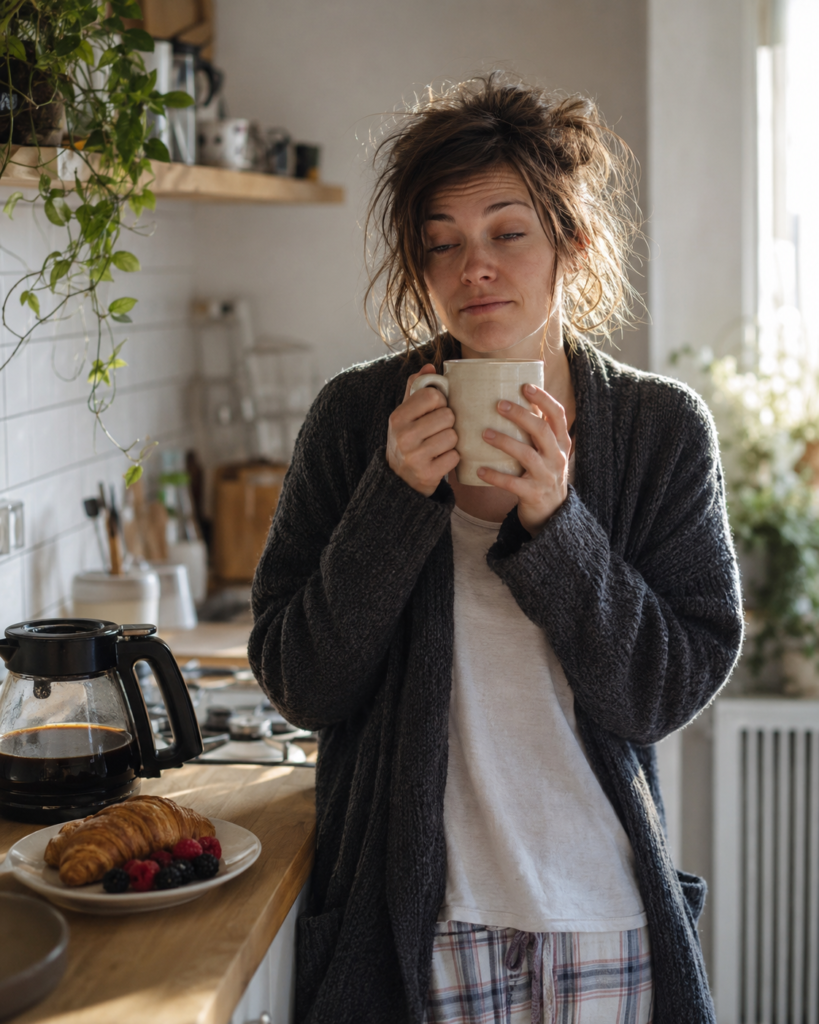
Until one morning, as I was drinking my coffee, I realized I was still exhausted.
This struck me as incredibly unfair.
I had clearly gone through the entire ritual.
I held the warm cup in both hands.
I took that first sip, full of hope, with great care.
But why didn’t I immediately feel alert, positive, and organized—and able to answer all those complex questions?
The answer was actually quite obvious.
Coffee wasn’t the problem.
It was just covering up the real issue.
For several days, I hadn’t been sleeping well.
Every night, I’d scroll through my phone until very late, telling myself it was a form of relaxation, all while feeling my shoulders grow stiffer and stiffer and my mind filling up with a dozen or so anxiety-inducing thoughts.
My wake-up times were completely irregular.
Sometimes I’d wake up very early.
Other times, because of the sleep deprivation from the previous days, I’d sleep straight through until nearly noon, as if my body were a credit card company willing to grant payment extensions.
My body clock had absolutely no idea what was going on.
To be honest, neither did I.

I still love coffee.
This isn’t a story about a woman who gives up lattes for good, switches to warm lemon water, and gains a sense of moral superiority as a result.
I have no interest in becoming that kind of person.
I’ve simply stopped expecting coffee to do the job that sleep is supposed to do.
I’ve started scheduling my last caffeinated drink earlier in the day.
I also try to keep my bedtime and wake-up time relatively consistent, even on weekends.
The first weekend was a bit of a struggle.
On Saturday night, I really wanted to stay up late.
There was no particular reason.
It was probably just because I thought that the mere fact that “today is Saturday” was enough to give me permission to make a not-so-wise decision.
On Sunday morning, I also really wanted to sleep in until noon.
But I still got up at my usual time, pulled back the curtains, stood in the kitchen, and felt full of doubt about my new lifestyle.

After sticking with it for a few weeks, some changes slowly began to appear.
I started feeling sleepy at relatively consistent times.
Mornings no longer felt like a sudden emergency.
I still needed a little time before I was ready to face the world with a smile, but at least I didn’t feel like I’d been suddenly thrown into the day.
What surprised me even more was that, once I started sleeping better, it wasn’t just my energy levels that changed.
When I’m particularly exhausted, everything feels more difficult.
Making breakfast is a hassle.
Going out for a walk feels like a massive undertaking.
Even an email with a slightly unfriendly tone might be interpreted by me as a personal attack.
But when I’m well-rested, I don’t become perfect.
It’s just that when things happen, there’s a little more breathing room between the event and my reaction.
That breathing room is important.
It makes me willing to prepare lunch instead of just grabbing whatever food is closest to me.
It makes me willing to go downstairs for a walk instead of collapsing on the couch the moment I get home.
It also helps me realize that sometimes so-called “bad moods” aren’t some profound truth about life.
I might just be tired.
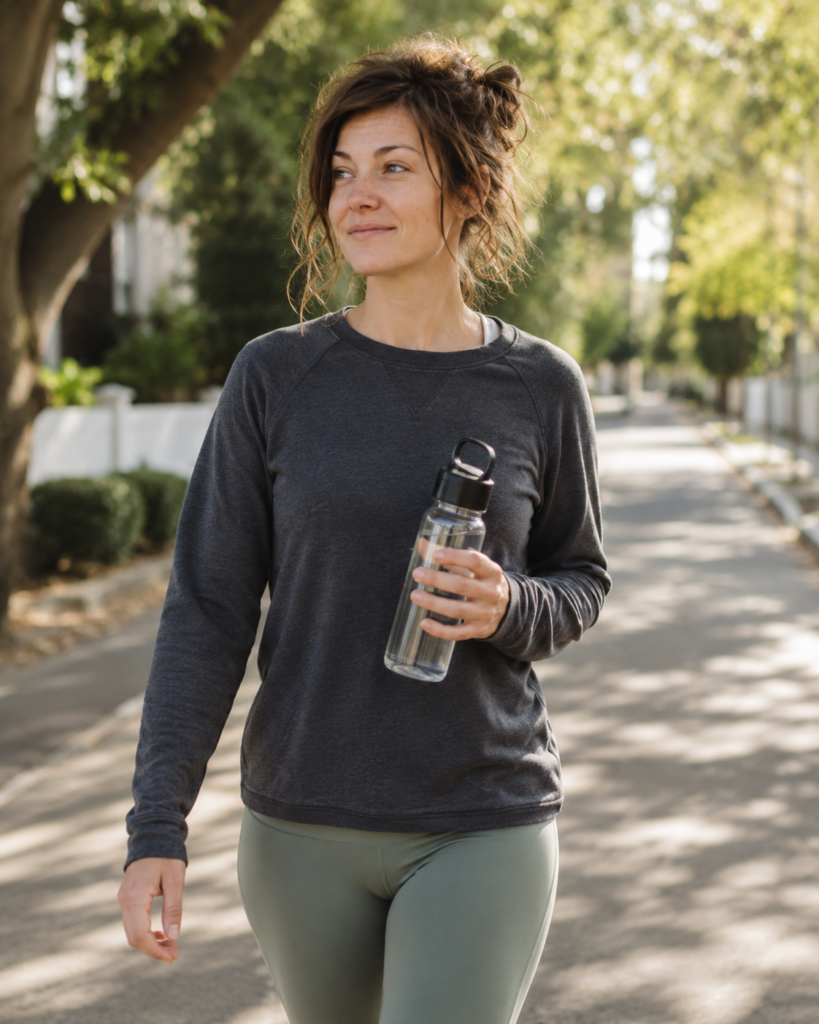
We tend to think of health as a contest of willpower.
Wake up earlier.
Work out harder.
Eat more perfectly.
Become a more disciplined and efficient person.
But sometimes, the first step toward health is simply turning off the light and going to bed early.
Now, I still drink my morning coffee.
Because I love the taste, and I love that quiet ritual.
But I no longer expect it to rescue me after a night of poor sleep.
Coffee has gone back to being just a drink.
A drink I really enjoy.
But it’s no longer my identity, my health plan, or my emergency rescue team.
